
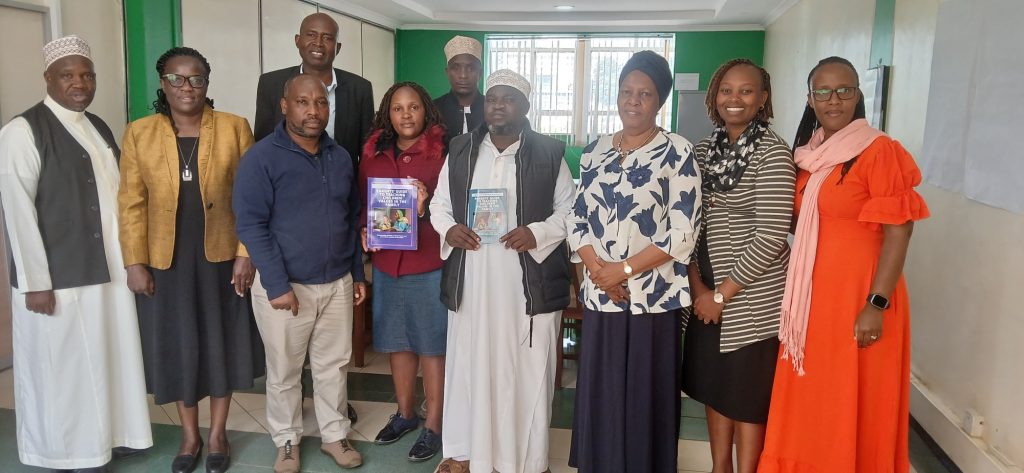
Global Peace Foundation Kenya, in collaboration with Global Peace Women, Scripture Union of Kenya, and the Muslim Centre for Peace and Reconciliation, convened a high-level Stakeholders Project Review Meeting at Scripture Union of Kenya to assess progress and chart the future of the Parents Guide to Teaching Children Values in the Family initiative.
Bringing together faith leaders, trainers, and development practitioners, the meeting reaffirmed a shared conviction: peacebuilding begins at home.
The session opened with a devotion led by Canon Rosemary Mbogo, setting a reflective tone for a day centered on impact, learning, and strategy. In his remarks, Daniel Juma emphasized the foundational role of parents in shaping society, noting that education must go beyond academics to include moral, spiritual, emotional, and physical development. He proposed a formal launch of the parenting manual to expand its reach and equip future parents with practical tools for values-based upbringing.
Canon Mbogo reinforced this vision, calling for intentional investment in both resources and personal transformation. “Peace is not an illusion; it starts from home,” she noted, urging stakeholders to align their actions with the values they promote. She also highlighted the need for market-driven programming, ensuring that interventions respond directly to the real needs of families.
Evidence of Impact and Growing Demand
Presentations from Global Peace Women, led by Irene Kizito and Wairimu Mwangi, showcased key achievements, insights, and Monitoring & Evaluation findings. Notably, survey results revealed a strong demand for a structured parenting manual, validating the relevance of the initiative.
Scripture Union of Kenya reported that out of 204 trained Trainers of Trainers (TOTs), several have exceeded expectations—facilitating sessions that have reached hundreds of parents. Similarly, the Muslim Centre for Peace and Reconciliation highlighted remarkable success, with 40 trained TOTs collectively reaching over 5,000 parents across Nairobi and Nakuru through mosques, madrassas, and community forums.
These efforts demonstrated the effectiveness of faith-based, community-rooted approaches, where leaders already embedded within communities serve as trusted agents of change.
Innovation, Challenges, and the Path Forward
Stakeholders acknowledged both achievements and challenges, including limited resources, gaps in monitoring tools, and evolving social dynamics such as mental health concerns, generational shifts, and changing family structures.
Practical recommendations emerged, including:
Strengthening Monitoring & Evaluation systems for impact tracking Expanding training models to include strategic and follow-up components Enhancing engagement with faith leaders through clear commitments Developing mentorship and incentive systems for trainers Leveraging digital platforms, including podcasts and online learning channels Creating interfaith forums for knowledge exchange and collaboration
A notable highlight was the call to make the program consumer-driven, where communities actively seek out values-based parenting support.
A Shared Vision for National Transformation
A message from Hanako Ikeno, President of Global Peace Women, underscored the deeper vision behind the initiative. Inspired by the 2024 Global Peace Leadership Conference in Nairobi, the program recognizes the family as the first institution of transformation, where values are nurtured and future leaders are shaped.
“Peace begins in the home,” she affirmed, emphasizing that empowering parents is essential to building resilient communities and sustainable peace.
The meeting concluded with a renewed commitment among partners to scale the initiative, strengthen collaboration, and advocate for policies that recognize the central role of families in nation-building.
As stakeholders look ahead, one message remains clear:
by strengthening families, we lay the foundation for lasting peace.